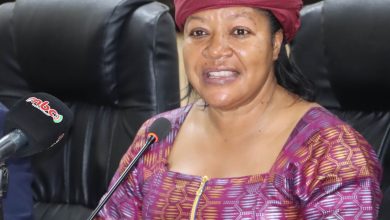
The newly-elected mayor of the City of Blantyre Isaac ‘Jomo’ Osman has declared what he calls a “peaceful and dialogue” approach to improving the condition of the country’s commercial city. In this interview, our Contributor HOWARD MLOZI caught up with Osman to appreciate his leadership style and approach to developing the city.

Q All the way from the ghetto to become the mayor of Blantyre, how does it feel?
A I feel greatly honoured. I am grateful to the leadership of President Peter Mutharika and the Democratic Progressive Party (DPP), my fellow councillors, executive management of the Blantyre City Council and, of course, the people of Bangwe for entrusting me with this huge responsibility. As someone who was born and raised up in the ghetto, this is a story of hard work, determination and resilience to be where I am today. I had a dream to serve the people, especially vulnerable groups and that is why I worked so hard to become what I am today. And I don’t take it for granted because God has been on my side.
Q Why have you prioritised peace, security and sanitation in your efforts to transform the city?
A First of all, you can agree with me that security is vital for any place, including cities like Blantyre because it ensures social order and economic stability. That is to say, there can never be protection of people, property such as business infrastructures and thriving businesses without security. Everyone deserves to operate in a safe and secure environment. Again, sanitation and hygiene are crucial for the growth of business in our city. For example, access to potable water and sanitation facilities such as toilets and clean business environment to enable business to thrive. It is against this background that we want to work towards achieving these goals. We want Blantyre to become a clean, law-abiding and secure city for everyone to enjoy business activities.
Q How are you going to achieve this?
A We have employed different strategies to ensure that Blantyre becomes one of the conducive economic hubs in the country. But first and foremost, we have prioritised partnership and collaboration with different stakeholders such as the Blantyre City Council, Malawi Police Service, through the South West Division, business communities of different nationalities, companies, and vendors, just to mention a few. My leadership believes in the power of collaboration and partnership to make our city better. For example, my office is collaborating with Blantyre City Council, Blantyre Water Board and Electricity Supply Corporation of Malawi, police and vendors to ensure that we have secure and proper sanitation facilities. For example, we want improved water, human and waste disposal and lighting facilities. Every resident in this city should understand that it is a collective responsibility to make our city clean and safe.
Q How is your development campaign going on?
A So far, so good. We are currently using peaceful contact and dialogue approach to get everyone on board so that together we transform our city. We are engaging business operators such as vendors and shop owners to observe order, sanitation and hygiene. We also want kabaza operators and vendors to operate from designated places. We do not want chaos such as overcrowding and accidents in the city. We are engaging businesses to work with the council diligently and professionally to ensure that city and ground rates, and other necessary fees, are paid on time.
Q How are you going to avoid running battles that we have previously seen between police and vendors?
A I believe everyone has a responsibility to contribute towards making Blantyre City vibrant. I believe there is none, including vendors, who do not want this to happen. Everyone wants their city to be great, and economically viable. That’s why we are engaging every concerned stakeholder such as vendors’ committees to support this campaign.
Q How are you going to deal with the growing problem of street connected children?
A My office is working with street-connected children in the city to ensure their own safety and that of other residents. In the past week, I have been engaging the street-connected children to assess their needs so that they should be supported accordingly. What I want is a proper system that empowers them socially, economically and emotionally. This is why I urged partners to work with my office to see how best we can find lasting solutions to their challenges. This week, I was glad to collaborate with Catholic Sisters from Blantyre who showed interest to work with my office in empowering vulnerable street-connected children. From experience, streets are not a good environment for children; that is why we need to support these children. But I must warn naughty street-connected children who might choose not to give the peaceful contact and dialogue approach a chance, that the law will catch up with them.